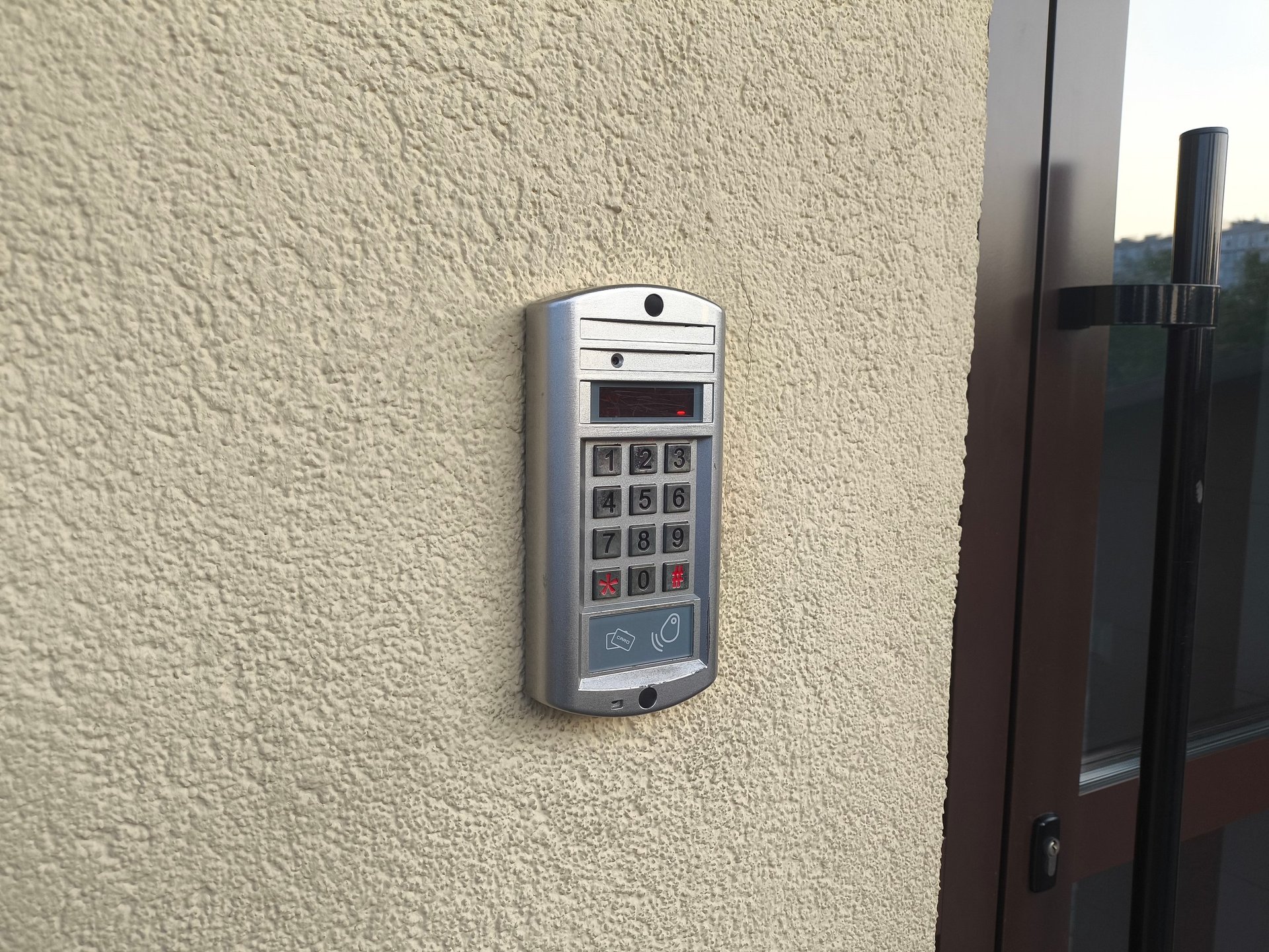
Commercial door keypad access control system on a building entrance

How Much Does a Full Security System Cost?

A commercial security system is priced per door plus the system behind it. The biggest cost drivers are how many entry points you control, the hardware each one needs, the wiring runs between them, and whether the system is standalone or managed with software. A single keypad on one door sits at the small end of the scale; a networked, multi-door system with individual credentials and records sits at the other. The honest way to price one is a site audit, which is why ours is free.

What You Are Actually Paying For

A full commercial security system is not one product. It is a stack: the locking hardware on each door, the device that decides who gets through it, the wiring and power feeding both, and, on larger systems, the controller and software managing the whole thing. Each layer is priced separately, and understanding that is the difference between comparing quotes properly and comparing totals blindly.

The locking layer is the strike or magnet physically holding the door. The decision layer is the keypad, card reader or biometric unit beside it. The infrastructure layer is cabling, power supplies and, where needed, battery backup. The management layer is the controller and software that let you add people, remove people and see records. Small systems can skip the management layer entirely; larger ones live or die by it.

The Per-Door Logic

Installers price per door because doors are where the variation lives. An interior timber door with power nearby is a quick, clean job. An exterior door in a masonry frame, a frameless glass entrance needing a magnetic lock, or a gate fifty yards from the nearest power all cost more, not because the hardware is exotic but because the work around it is.

That is also why two quotes for "the same system" can differ sharply. One installer may have priced the wiring route honestly, and the other may not have looked. When you compare quotes, compare what each one says about your hardest door, because that is where the difference between them usually hides.

One-Off Costs vs Ongoing Costs

Hardware, installation and setup are paid once. What varies is whether anything follows. Standalone keypads and readers have no ongoing cost at all: the keypad on a stockroom door will run for years on nothing but occasional maintenance. Cloud-managed systems carry a recurring cost, and what that buys is remote management, records and support, which on the right premises is worth every cent and on the wrong ones is a subscription nobody uses.

The question to ask of any recurring cost is what happens if you stop paying it. A good vendor gives you a straight answer. Ask us and you will get one, because we quote one-off and ongoing costs separately and label them as such.

Where Security Budgets Get Wasted

The most common waste we see is capability nobody uses: enterprise software managing four doors, biometric readers on doors a keypad would serve, credentials for a headcount the business does not have. The second most common is the opposite, false economy: consumer-grade hardware on a commercial door, which fails under commercial use and gets bought twice.

The third is paying to control the wrong doors. A building's risk is not spread evenly, and neither should its budget be. The stockroom, the cash office and the server closet usually justify more than the corridor door beside them. A good specification puts the money where the risk is, which is precisely what a site audit is for.

How to Get a Real Number for Your Building

Any number quoted before someone has seen your doors is a guess dressed up as a price. The honest sequence is audit first, specification second, price third. Ours works exactly that way: we walk every door and gate with you, tell you which ones genuinely need controlling and which do not, and quote with clear pricing and no hidden fees. The audit is free, and there is no obligation on the far side of it.

If you want a sense of scale before that conversation, the rule of thumb is simple: count the doors you actually need to control, note which are interior, exterior, glass or gates, and remember that the count matters more than anything else on the list.

Related Questions

Security System Cost FAQs

Usually because they are not quoting the same job. Differences in hardware grade, wiring assumptions, what counts as included, and whether ongoing costs are shown up front all move the total. Compare quotes line by line rather than total against total, and be suspicious of any quote produced without a site visit.

During, almost always. Open walls and ceilings make wiring runs faster and cleaner, and hardware can go in as doors are hung rather than retrofitted around a trading business. If a fit-out is on your horizon, pricing access control into it is worth doing even if the system itself comes later.

No. Cost follows controlled doors, not square footage. A large warehouse might need three controlled doors and a gate, while a small clinic might justify five. The audit determines the count, and the count drives the price.

Yes, and it is often the right way in. A standalone unit on the door that worries you most is a complete job on its own, and networked systems are designed to grow door by door. Starting small only goes wrong when the first purchase locks you into a platform that cannot expand, which is one of the things we check before recommending anything.

Get a Number That Is Actually Yours

Tell us about your property and what you need. We will audit it free, then quote it properly: clear pricing, no hidden fees, no pressure.