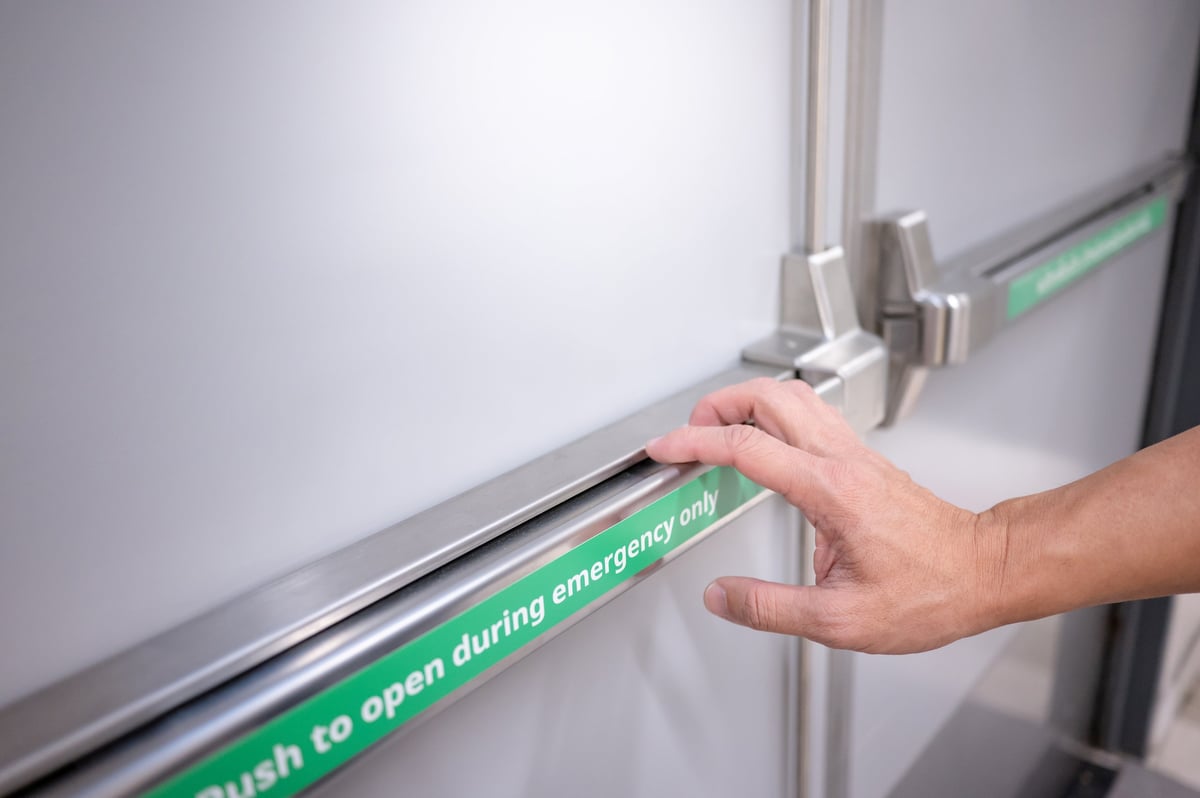
Male hand pushing stainless steel panic bar opening the emergency fire exit door in public building

What Are the Compliance Requirements for Commercial Access Control?

Compliance in access control is mostly about how people get out, not how they get in. Fire and life safety codes, accessibility rules and local requirements all converge on one principle: a locked door must never trap anyone. What your specific building requires depends on its occupancy, its use and your local authority, so the final word always belongs to your fire marshal, your inspector and your own advisors. What follows is how to think about it, not a ruling on your building.

Why Egress Comes First

Every conversation about securing a door is secretly two conversations. One is about keeping the wrong people out, which is why you called. The other is about letting everyone out, every time, instantly, without keys, codes, credentials or thought, and that second conversation is the one the law cares about most.

The moment electronic hardware goes on a door, the exit side of that door becomes a life safety matter. That is why every controlled door we fit carries exit hardware that works regardless of what the electronics are doing, and why a maglock without a properly specified release is not a security system, it is a hazard with a keypad.

The Frameworks in Plain Language

Several bodies of rules touch commercial access control, and it helps to know what job each one does. Fire and life safety codes, of which the National Fire Protection Association's are the most widely referenced, govern how doors on exit routes must behave: free egress, panic hardware where occupancy demands it, and strict conditions on anything that delays a door opening. Building codes fold those requirements into how a building is approved and inspected. Accessibility rules under the Americans with Disabilities Act shape the physical interaction: mounting heights, operating force, and hardware that can be used without tight grasping or twisting.

None of this is a menu. Which provisions bind your building depends on its occupancy classification, its size, its use and what your local jurisdiction has adopted, which is why two similar-looking buildings can carry different requirements and why generic internet answers, this page included, cannot substitute for your local authority's.

Where Access Control Installs Go Wrong

The failures we get called to fix follow a pattern. A magnetic lock fitted without a compliant release path, so the exit depends on the electronics behaving. Delayed egress hardware installed where the occupancy does not permit it, or without the fire alarm interconnection that releases it. Hardware mounted at heights or with mechanisms that fail accessibility. Doors modified over the years by different hands until nobody can say how the opening is supposed to behave in an emergency.

Almost none of this comes from malice. It comes from security being bought one door at a time without anyone owning the whole picture. The fix starts with an audit of what is actually on the doors, which is precisely what our free site audit documents, and what a magnetic lock or electric strike installation from us always accounts for from the start.

One compliance area sits apart from doors and hinges: data. Texas law addresses the capture of biometric identifiers for commercial purposes and includes an informed consent requirement, which means fingerprint and facial systems carry obligations that cards and codes do not. How those obligations apply to your business is a question for your own legal advice, ideally answered before the readers go on the wall rather than after.

We cover this in more depth on our biometric access control page, including what we will and will not advise on. The short version: we can tell you how a system stores its templates, and your advisor tells you what your obligations are. Both halves matter.

Who Owns the Compliance Call

You do, with your authorities and advisors, and any installer who claims otherwise is overreaching. What a good installer owes you is different and just as important: hardware that is capable of compliance, fitted in a way that does not foreclose it, honest flags when something on your doors looks wrong, and no participation in shortcuts.

That is our standing position. We will tell you plainly what a door is currently capable of, what we think it needs, and when a question belongs with your fire marshal or your counsel rather than with us. We work with your fire and life safety requirements rather than around them, and if a requested configuration would leave someone stuck behind a door, we will decline it and explain why.

Related Questions

Access Control Compliance FAQs

Delayed egress hardware holds an exit closed for a short, code-defined period after someone attempts to leave, with an alarm sounding and immediate release on fire alarm activation. It is permitted only in specific occupancies under strict conditions, and whether your building qualifies is a determination for your local authority, not a product choice.

Local practice varies, but doors on exit routes sit squarely within what fire officials inspect, and modifications to how those doors lock and release are exactly what they look at. Involving the relevant authority early is cheaper in every way than being corrected by them later.

Yes, when it is specified for it. Reader and keypad mounting heights, door operating force and hardware that works without tight grasping or twisting are all solvable design inputs. Accessibility fails on these doors when nobody thought about it, not because control and accessibility conflict.

Not automatically. Doors get modified, hardware gets swapped, uses change, and a configuration that passed once can drift out of line without anyone deciding it should. If nobody can say with confidence how every controlled door behaves in an emergency today, that is exactly what an audit is for.

Find Out What Your Doors Actually Do

Tell us about your property and we will walk every controlled door with you: what is fitted, how it behaves, and what we think needs attention. Free, documented, and with no pressure attached.