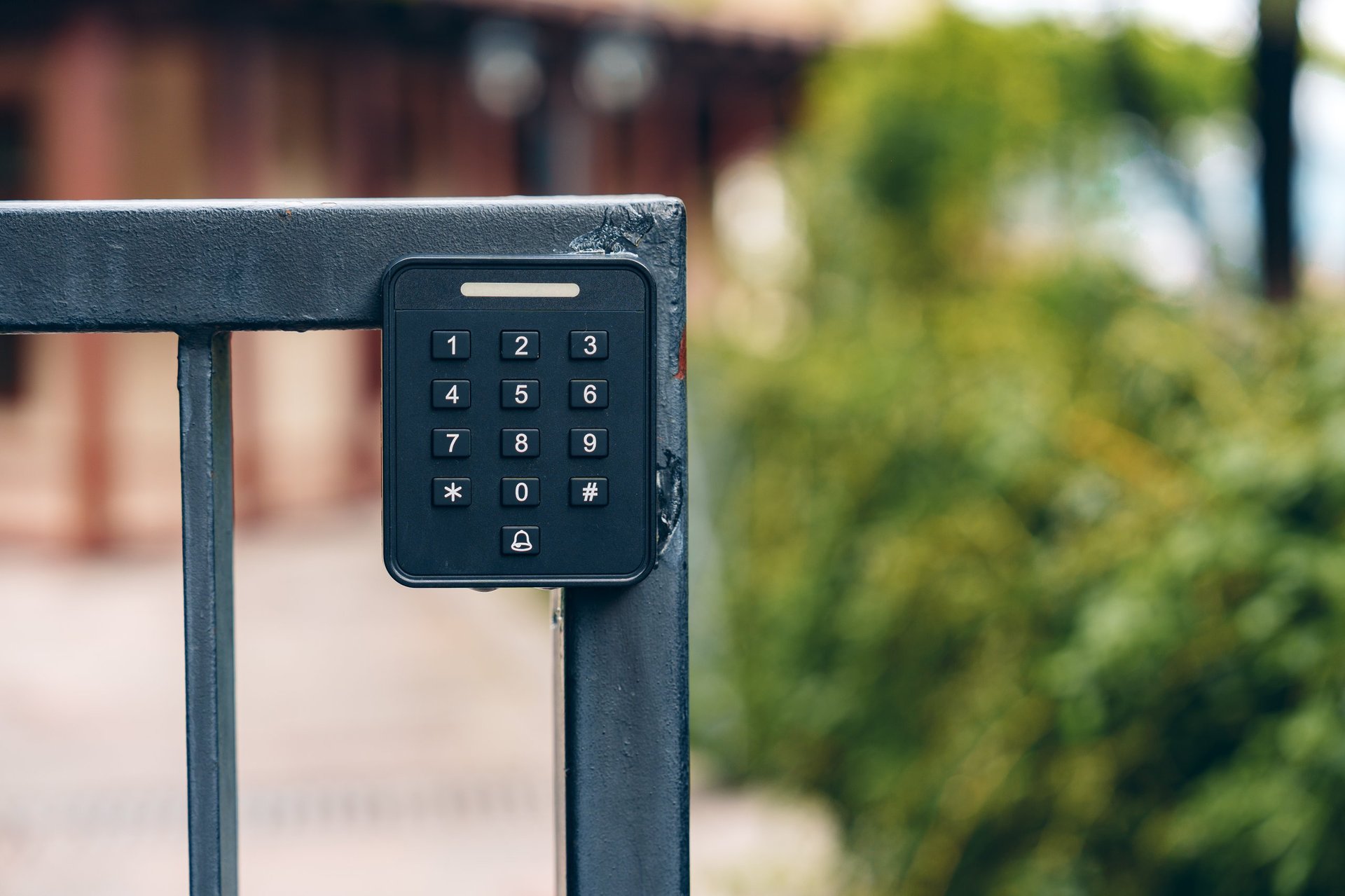
A keypad is installed on a metal gate in front of a building surrounded by trees and plants.

What Is the Best Digital Security System?

Digital security is three different categories doing three different jobs: access control decides who gets through doors, cameras record what happened, and alarms announce what should not be happening. The best system is not one of the three, it is the right combination for your premises, and for most commercial buildings the sequence starts at the doors. This guide explains what each category actually does, so you can compare them on the job rather than the brochure.

Three Categories, Three Jobs

"Digital security system" gets used as if it named one product, and it names at least three. Access control is the category that acts: it physically decides, at every controlled door, who passes and who does not. Cameras are the category that remembers: they record events for deterrence and evidence. Alarms are the category that speaks up: they detect conditions that should not exist and tell someone.

The confusion matters because the categories are not interchangeable. A camera cannot hold a door. An alarm cannot tell a courier from a burglar. An access system cannot show you a face. Businesses that buy one category expecting another's job end up disappointed with equipment that is doing exactly what it was built to do. Our guide to the best type of security covers how the layers combine strategically; this one compares what each actually delivers.

What Access Control Does That Nothing Else Can

Access control is the only category that prevents rather than observes. A reader or keypad on a door stops the wrong person at the threshold, around the clock, without anyone watching anything. It is also the only category that manages people: credentials issued per person, scoped to doors and hours, and killed the moment someone leaves, which retires the oldest security problem in business, the key that never came back.

Its third distinct capability is the record. A networked system writes down which credential passed which door and when, which turns questions like "who was in the stockroom on Sunday" from arguments into lookups. No camera and no alarm can produce that answer with a name attached. For a small premises, even a single standalone keypad delivers the prevention half of this at modest cost.

What Cameras Do Well, and What They Cannot

Cameras are unmatched at two things: deterring opportunists who can see they are being recorded, and producing evidence after the fact. A good camera position turns an incident from a mystery into a timeline, supports insurance claims, and settles disputes about what actually happened. Paired with door events, footage becomes searchable by incident rather than by scrubbing hours of video.

What cameras cannot do is intervene. A camera watching an uncontrolled door will faithfully record your stock leaving through it. They also carry the quiet operational cost of storage and attention: footage nobody ever reviews protects nobody. The honest role for cameras in most commercial buildings is the evidence and deterrence layer over a controlled perimeter, not a substitute for one.

Where Alarms Fit

Alarms own the hours when nobody is there. Intrusion detection, door contacts and motion sensing exist to notice the building being entered when it should be empty, and to escalate: a siren, a notification, a monitoring response. That detection job is real and necessary, and no other category covers it as directly.

The classic alarm weakness is context: a standalone alarm cannot distinguish the cleaner from an intruder, which is where false alarms are born and where alarm fatigue follows. Connected to an access system, the alarm inherits context: a door opened with a valid credential is normal, the same door forced is not, and the alerts that fire are ones worth acting on. That interconnection, more than any individual product, is what makes a digital setup feel intelligent.

Choosing the Combination for Your Building

Rank your realistic losses and fund the category that addresses the top of the list first. Premises whose risk lives at the doors, which is most of them, start with access control on the doors that matter, with compliant exit hardware as part of the job. Premises with genuine out-of-hours exposure add alarm coverage next. Cameras come where evidence and visible deterrence justify them, integrated with the door events rather than floating free.

Sized honestly, the combination is rarely extravagant: a handful of controlled doors, detection for the empty hours, and cameras only where they earn their storage. Our guide to choosing a system as a small business covers the sizing logic in detail, and the free audit applies it to your actual building rather than a hypothetical one.

Related Questions

Digital Security System FAQs

Rank your likely losses. If the risk is people passing doors they should not, which covers theft, shrinkage and ex-staff access, control the doors first, because cameras only document that problem. If your genuine top risk is disputes and evidence, cameras can lead. Most commercial buildings are in the first group.

Increasingly, yes. Door events can trigger recording, forced doors can raise alarms, and out-of-hours entries can notify a phone, all from the door system's knowledge of what is legitimate. Full single-platform integration depends on the products involved, which is a specification question we answer during the audit.

The local functions do. Doors keep deciding, cameras keep recording locally and alarms keep sensing, because none of them depends on the internet to do its core job. What pauses is the remote layer: notifications, cloud viewing and off-site management, which resume when the connection does.

Buying one category and expecting all three jobs from it, usually cameras bought to solve a door problem. The second most common is buying well and never maintaining: unwatched footage, unrevoked credentials and untested alarms degrade a good purchase into a false sense of security.

Get the Right Combination, Not the Biggest One

Tell us about your property and what keeps going wrong. We will rank the risks with you, recommend the categories that actually address them, and quote it with clear pricing and no hidden fees.