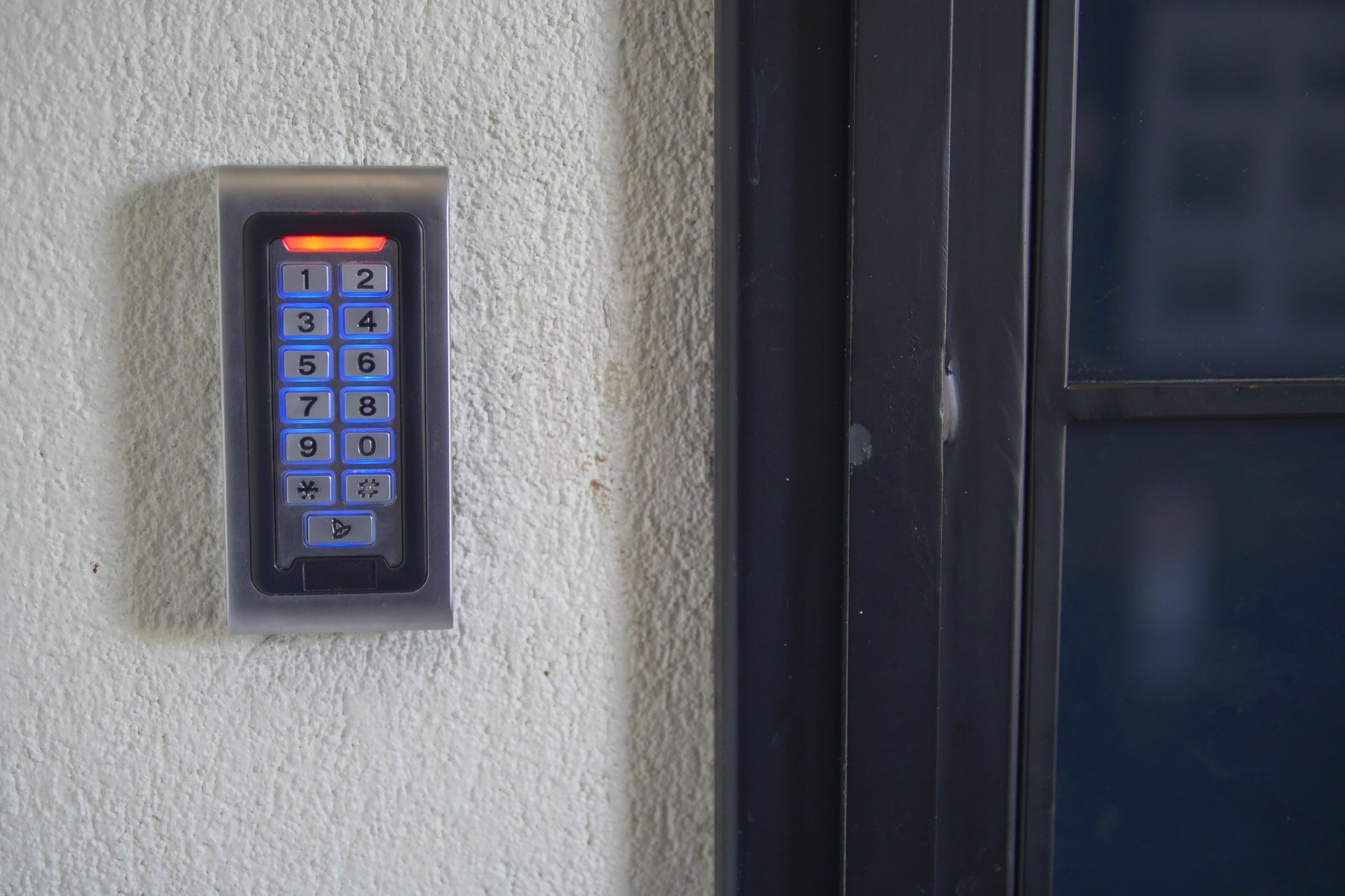
Keypad entry system installed near the entrance of a modern commercial building

What Is the Best Access Control System for a Small Business?

The one sized to your doors, not to a brochure. For most small businesses the best system is a standalone keypad or reader on the one to three doors that genuinely matter, with no software and no subscription. A networked system earns its place when you need individual credentials, records of who came through, or more doors than codes can sensibly manage. The best purchase is the one a specialist would make for their own premises, and this guide walks you through that decision.

Start With the Problem, Not the Product

Most small businesses arrive at access control through one of three problems. Keys that do not come back when people leave. A door that has to admit some people and refuse others, like a stockroom or an office. Or no idea who has been through a door that matters. Each problem points at a different solution, and naming yours first is what stops you buying the wrong thing.

Keys not coming back is solved by codes or credentials that die on departure. Selective doors are solved by putting control on those doors and nothing else. Needing to know is solved by systems that keep records, which is a genuinely different class of purchase. If none of those three sounds like you, it is possible you do not need access control yet, and we will tell you so.

The Standalone Route

A standalone unit is a complete access control system living in one device on one door. A keypad holds its codes, a standalone reader holds its credentials, and there is no controller, no software, no computer and no monthly cost. Fit it, program it, done.

For a huge share of small premises this is the honest answer. A cafe's back door, a shop's stockroom, a workshop office, a practice's records room: one or two standalone doors cover the actual risk for a fraction of a networked system's cost. The limits are worth knowing: standalone units keep limited or no records, codes are managed at the door rather than from a desk, and each unit is its own island. Those limits matter to some businesses and not at all to others, which is the whole point of deciding by problem rather than by product tier. Our guide to what a full system costs covers the money side of this divide in more detail.

When a Networked System Earns Its Keep

Three situations justify the step up. First, individual accountability: when you need to know which person opened a door, not just that a valid code was used, you need individual credentials and a system that records them. Second, headcount and churn: past a certain staff count, managing codes at the door stops being practical and managing people from a screen starts paying for itself. Third, door count: once several doors need control, one system running all of them beats a scatter of islands.

The step up buys real capability: records, schedules, credentials removed from a desk in seconds, and a system that grows door by door. What it costs is the controller, the setup, and often an ongoing fee. Small businesses that need it should buy it without guilt. Small businesses that do not should keep their money.

The Decision Tree

Ask four questions in order. How many doors genuinely need control, counting only the ones where the wrong person getting through costs you something. Do you need to know who, or only to keep the wrong people out. How often do people join and leave. And is there any realistic chance the door count grows.

One to three doors, no need for records, modest churn: standalone, and spend the savings on better hardware for those doors. Records needed on even one door, or churn that makes code management a chore, or a door count heading past a handful: networked, sized to today with room for tomorrow. Genuinely unsure: that is what the free audit is for, and unsure is the correct state to be in before anyone has walked your doors.

Mistakes Small Businesses Make Buying Security

The expensive mistakes are consistent. Buying consumer smart locks for commercial doors, which fail under commercial use and rarely play well with proper exit hardware. Buying an enterprise platform because the salesperson's demo was impressive, then using a tenth of it forever. Controlling the wrong doors, typically the front door that was never the risk, while the stockroom stays on a worn key. And leaving the system unmanaged, so that two years in, the code is common knowledge and half the credentials belong to people who left.

Every one of those is avoidable with the same habit: decide what problem you are solving before anyone shows you a product. That is how we quote, it is why our audit is free, and it is why the recommendation is sometimes smaller than the budget you arrived with.

Related Questions

Small Business Access Control FAQs

The door where the wrong person getting through costs most, which is rarely the front door. Stockrooms, cash offices, records rooms and staff-only areas are the usual answers. Control the highest-consequence door properly, then extend if and when the next door justifies it.

There is no magic number, because records and churn matter as much as count. A single door needing a log of who entered justifies software on its own, while five doors on stable shared codes may never need it. As a rough shape: past a handful of doors, or past the point where managing codes at the door is a chore, the software starts earning its cost.

Rarely. Residential smart locks are built for residential duty cycles, and commercial doors, closers and exit hardware are a different mechanical world. Commercial-grade standalone units cost more for a reason, and the reason shows up in year two.

The door can, and that is what matters. Wiring and locking hardware fitted properly for a standalone unit are reusable when a networked system arrives, so starting small does not strand the investment. We fit standalone doors with that future in mind as standard.

Get a Recommendation Sized to Your Business

Tell us about your premises and the doors that worry you. We will audit them free, recommend only what earns its place, and quote it with clear pricing and no hidden fees.