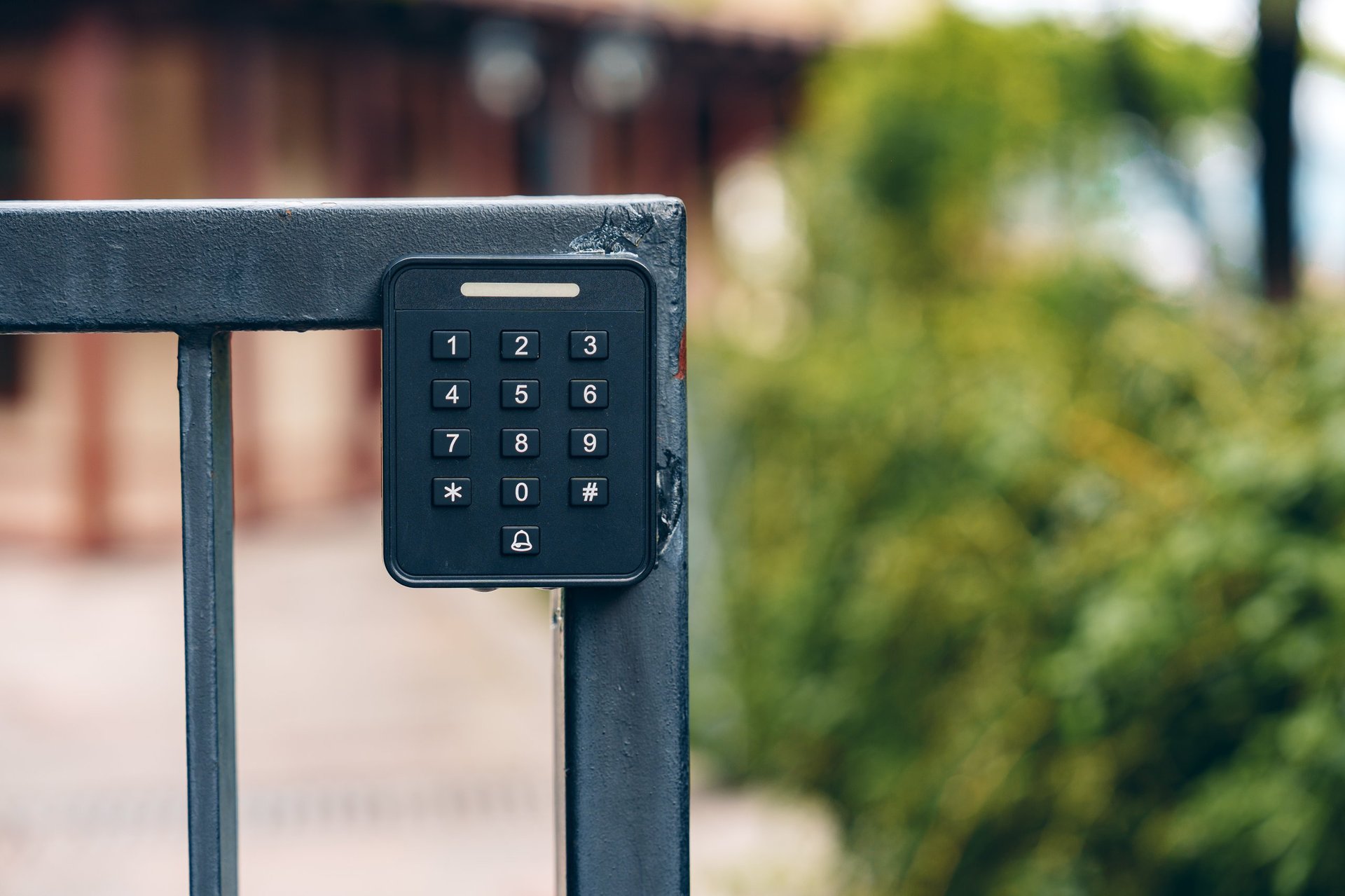
A keypad is installed on a metal gate in front of a building surrounded by trees and plants.

What Is the Best Security System Without a Monthly Fee?

Standalone access control hardware: keypads and readers that hold their own codes and credentials, need no software, no cloud and no subscription, and keep working for years on a single upfront cost. For many businesses that is genuinely all the system they need. The honest caveat is that subscriptions do buy real things, records and remote management chief among them, so the right question is not how to avoid fees, it is whether what they buy is worth anything to your premises.

What Runs With No Fee at All

Standalone access control is the fee-free workhorse of this trade. A commercial keypad holds its codes in the unit itself: program them at the door, change them at the door, and the thing runs indefinitely on nothing but power and occasional maintenance. Standalone readers do the same with cards and fobs, enrolling credentials directly without a controller or software behind them.

The locking hardware beneath is equally subscription-free by nature: electric strikes, magnetic locks and exit devices are electromechanical components that neither know nor care whether a cloud exists. Fit good hardware once and the ongoing cost is the maintenance any door hardware needs, not a bill for permission to keep using it.

What Subscriptions Actually Buy

Recurring fees on modern systems fund a management layer: administer users from a phone, see records of who passed which door, set schedules, receive alerts, and manage several sites from one screen. On premises with churn, multiple doors or accountability requirements, that layer is not padding, it is the point, and paying for it is rational.

The fair test of any recurring fee is the answer to one question: what stops working if you cancel. A good vendor answers plainly, and the answer varies from "you lose remote access but the doors keep working" to arrangements where rather more dies than you expected. Ask before you buy, not after. We label one-off and ongoing costs separately in every quote for exactly this reason, and our guide to what a full system costs covers the wider money picture.

Who Genuinely Does Not Need One

The no-fee route fits a recognizable profile: a small number of controlled doors, a stable or modest team, shared or individual codes managed by one responsible person, and no requirement to prove who passed a door after the fact. A cafe's back door, a shop's stockroom, a workshop office, a small practice: premises like these can run standalone for years and never miss the software.

It also fits businesses that simply dislike dependencies, and that preference is legitimate. A standalone door has no account to lapse, no platform to be discontinued, and no vendor whose pricing changes reach into your building. Our small business buyer's guide walks the full decision tree; the short version is that if records and remote management would go unused, the fee that funds them is waste.

The Trade-Offs, Stated Plainly

Fee-free means doing without three things, and pretending otherwise would be selling. First, records: most standalone units keep limited or no history, so "who went in" has no answer beyond "someone with the code". Second, remote everything: codes change at the door, not from a beach, and there are no alerts when something odd happens. Third, scale: each standalone door is its own island, and past a handful of islands the administration becomes its own quiet cost.

None of these is a flaw; they are the definition of standalone. The mistake is only in mismatch: a business that needs accountability running code-only doors, or a five-site operator managing fifty islands by van. Match the profile honestly and the no-fee route is not a compromise at all.

Keeping the Door Open to Upgrade Later

The smart way to buy standalone is to make the door upgradeable even though the unit is not networked. Wiring runs installed properly, locking hardware of a grade a future system can drive, and exit hardware that passes testing today will all carry straight over if a networked system arrives in three years. The standalone unit is then the only component replaced, and the investment in the door survives intact.

That is how we fit standalone doors as standard, because businesses grow and needs change, and the cheapest upgrade is the one the first install quietly prepared for. If you want the fee-free system today with the upgrade path preserved, say exactly that at the audit and it becomes the specification.

Related Questions

No Monthly Fee Security FAQs

The keypad stops deciding while the power is off, and what the door does depends on the locking hardware's configuration, which is a per-door design choice made at installation. Battery backup covers short outages, and the exit side of the door works regardless. It is a question we settle door by door during the audit, never an accident discovered later.

Yes, and it varies widely by unit, from a handful to hundreds. Capacity is one of the specification points we match to your team size before recommending a unit, along with whether it supports individual codes per person, which is what makes removing one leaver painless.

Partially. Some standalone units keep a limited local log readable at the door, which answers occasional questions but is not a management tool. Genuine per-person records with easy review are the territory of networked systems, and that capability is a fair part of what their fees fund.

Not inherently. The lock on the door is exactly as strong either way, and a well-managed standalone door beats a neglected networked one. The difference is capability, records, alerts and remote control, not the physical security of the opening. Insecurity creeps in through mismanagement, and both kinds of system can suffer that.

Own Your System Outright

Tell us about your premises and we will spec the no-subscription version honestly, flag anything a fee would genuinely earn, and quote it with clear pricing, no hidden costs and nothing recurring you did not choose.